Services
Complete hood-system degreasing — canopy, filters, plenum and grease troughs taken back to bare metal, polished and documented.
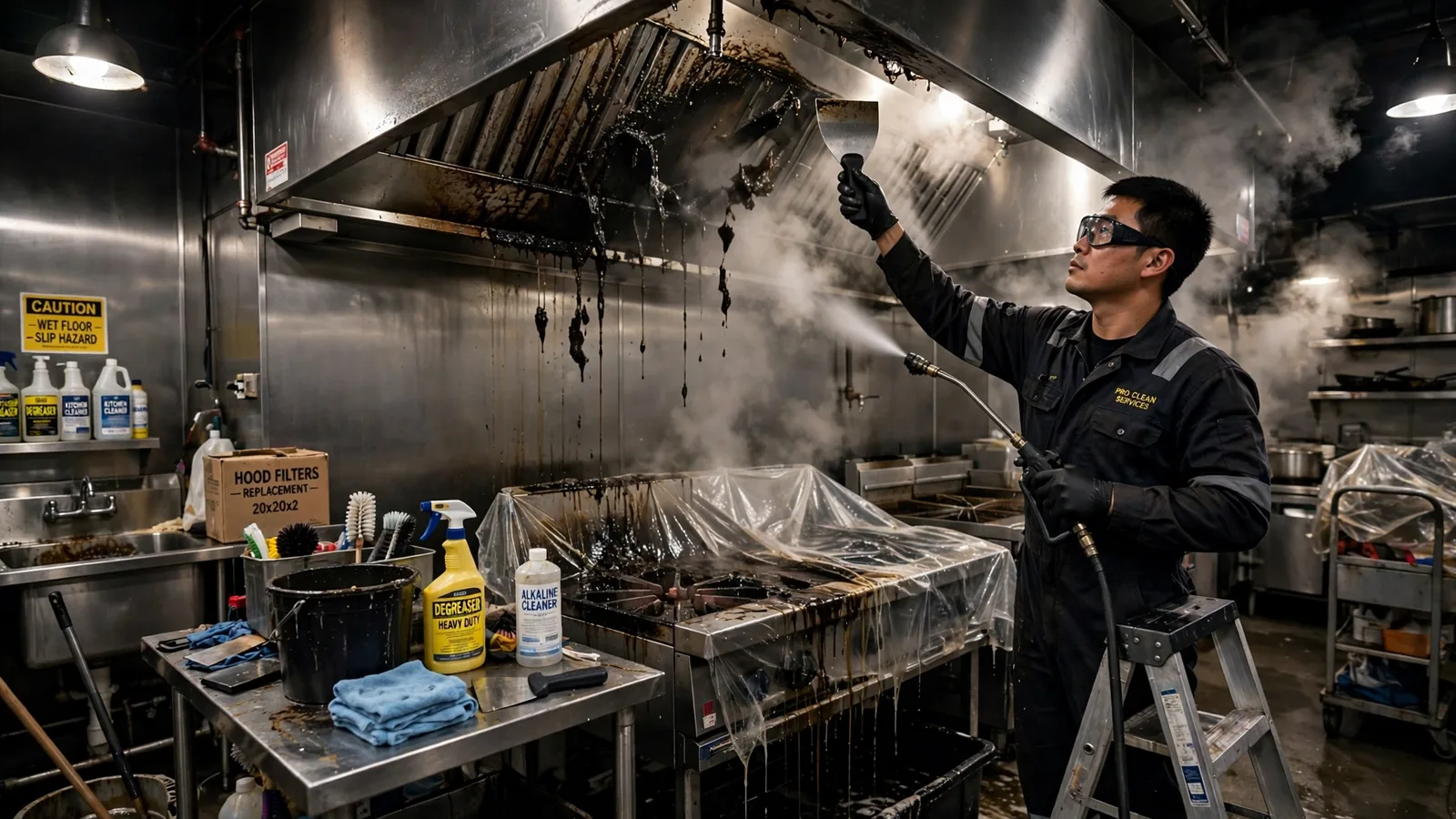
The hood canopy is where every inspector looks first — and where grease announces itself. Our hood cleaning service strips the entire canopy system back to bare metal: the canopy interior and exterior, baffle filters, grease troughs and cups, and the plenum behind the filters where grease collects out of sight.
We work the way NFPA 96 expects the job to be done: equipment protected and draped before we start, grease scraped and chemically degreased, hot-water pressure washing where the system allows it, and stainless polished before we leave. Then we document it — before-and-after photos, a dated service sticker on the hood, and a cleaning certificate for your fire marshal and insurance files.
Every hood cleaning ends with the documentation package: before-and-after photos, a cleaning certificate naming the system and date of service, and the dated service sticker placed on the hood where your inspector expects to find it.
Tell us about your kitchen — we call back fast, inspect free, and quote in writing. Nights available.
Inspections are free and the advice is honest — including when the honest answer is "your current schedule is fine."
The cooking line is shut down, draped and sealed so degreaser and wash water never reach your equipment or food-contact surfaces.
Loose and carbonised grease is scraped by hand; filters come out and go into a degreasing soak.
Caustic degreaser is applied and dwell-timed, then the system is hot-water pressure washed and rinsed to bare metal.
Stainless is polished, filters reinstalled, and the visit is documented with photos, your certificate and the dated hood sticker.
NFPA 96 ties frequency to cooking type and volume: monthly for solid-fuel cooking, quarterly for high-volume operations such as 24-hour and charbroiler kitchens, semi-annually for moderate-volume kitchens, and annually for low-volume ones. We recommend the right interval for your kitchen after inspecting the system — and put it in writing.
Yes. Our cleaning scope follows NFPA 96 — the standard your fire marshal inspects against — covering the hood, filters, plenum, duct access points and fan. After each visit you receive a certificate and a dated service sticker documenting the service.
No. Hood cleaning is scheduled around your hours — typically at night or between services — and the line is protected while we work. Most kitchens open normally the next morning.
The canopy, filters, plenum and grease troughs are part of every hood cleaning. The ductwork and rooftop fan are separate scopes we recommend on the same visit — see our exhaust duct and fan cleaning service — because a clean hood over a loaded duct is only half a job.
Yes — neglected systems are a large part of our work. Heavily built-up systems may need a first deep restoration clean before they can go onto a normal maintenance interval, and we will tell you that honestly after the inspection, with photos.
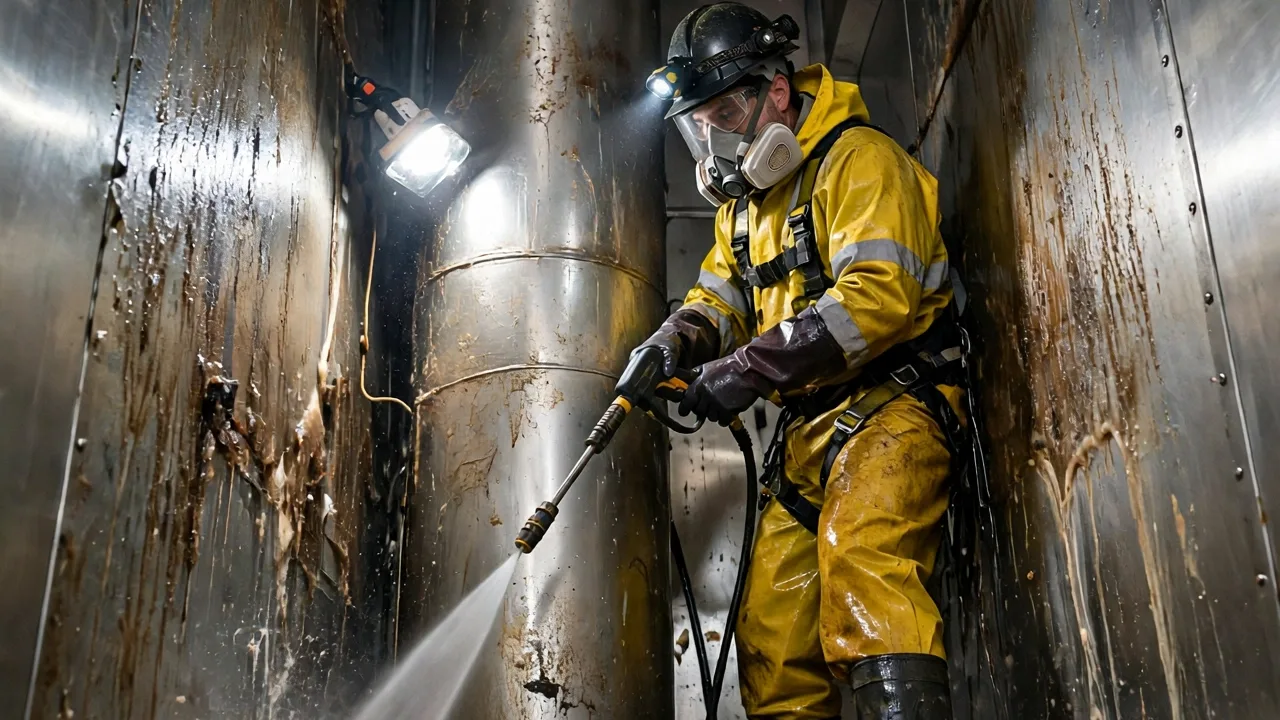 Exhaust Duct & Fan CleaningThe hidden half of the system: vertical and horizontal ductwork scraped and washed, rooftop fan degreased, access panels fitted where the duct cannot be reached.
See the service →
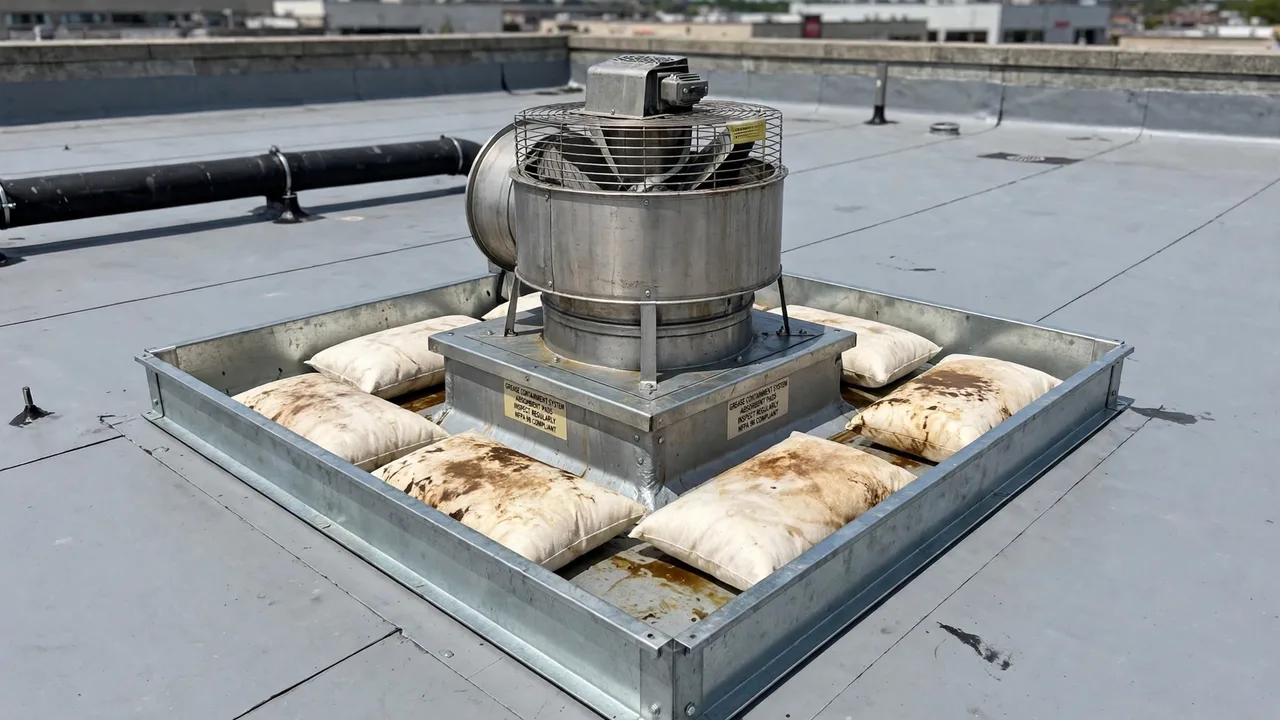 Rooftop Grease ContainmentGrease containment systems, pillow and grease-box service that keep exhaust grease off your roof membrane — and out of your landlord's and insurer's reports.
See the service →
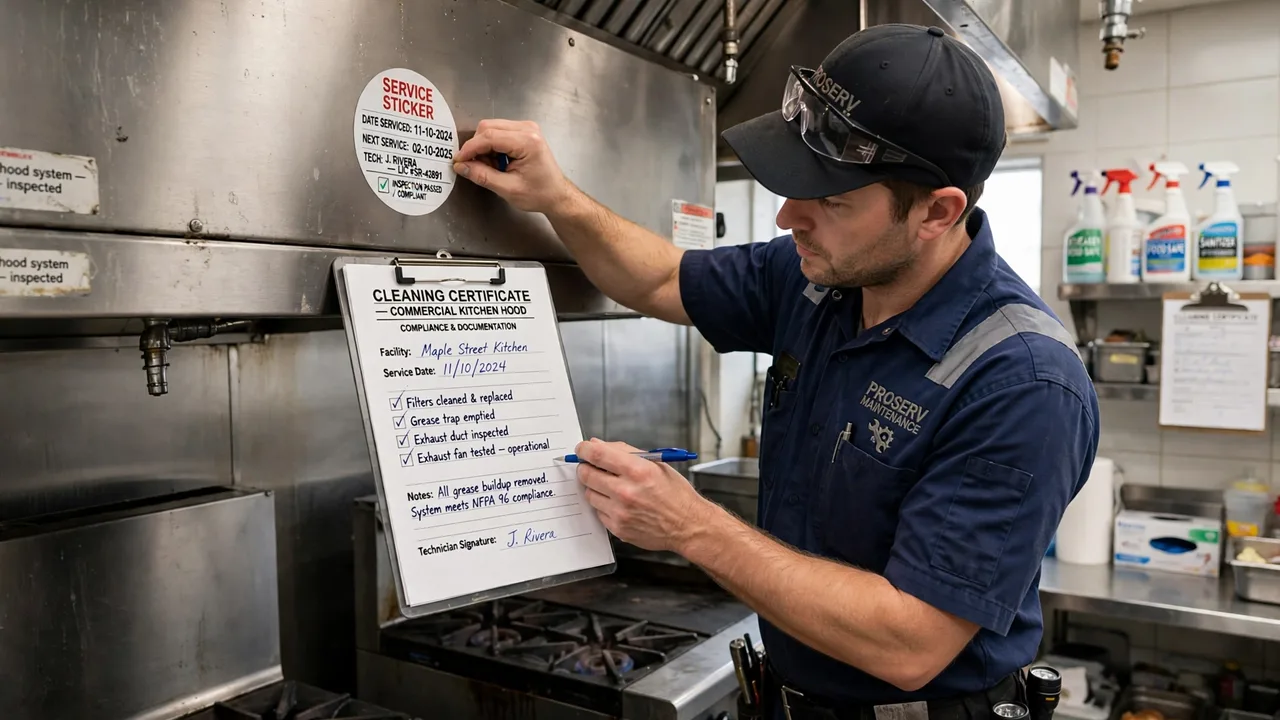 Compliance Documentation & CertificatesThe paperwork that passes inspections: cleaning certificates, dated hood stickers, before-and-after photo reports and a service history your fire marshal and insurer can read at a glance.
See the service →
Free on-site inspection, a written scope and frequency recommendation, and night scheduling that never touches your service hours.