March 11, 2026 · Eagle Hood Cleaning
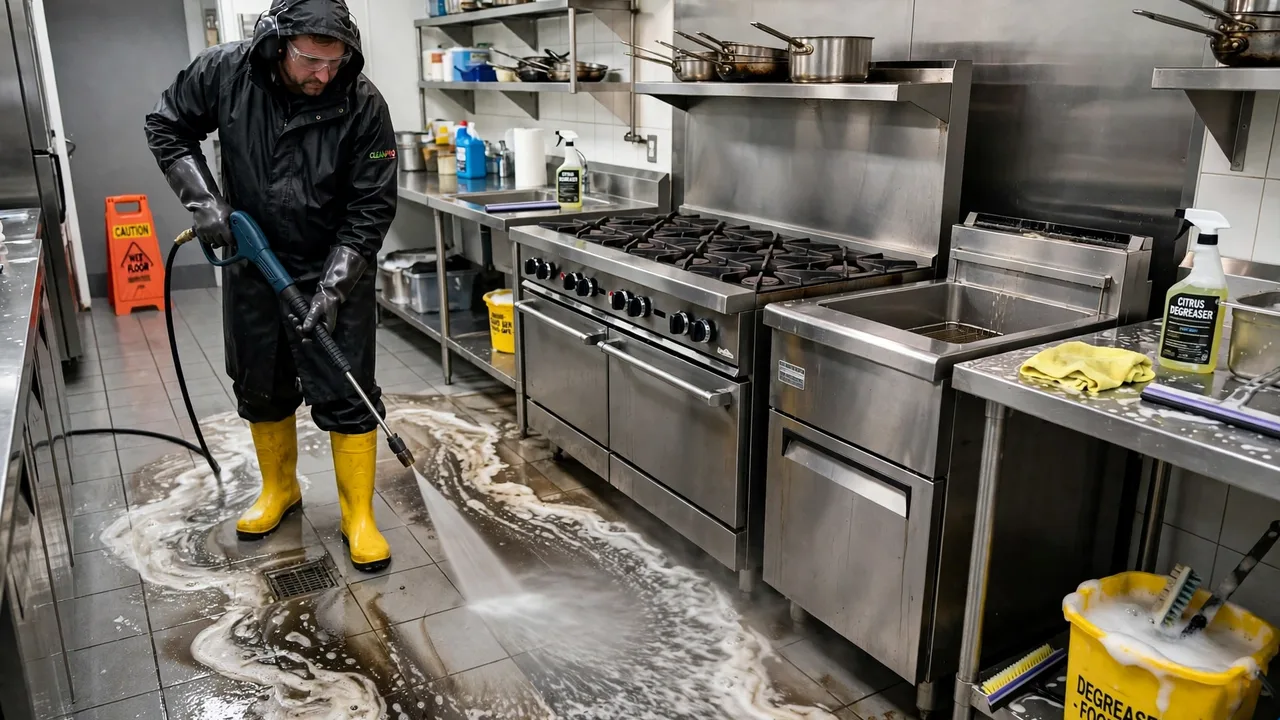
It is less common than grease, but it appears: mould growth around hood systems and kitchen ceilings, usually where condensation, leaks or chronic steam meet poor ventilation. Honesty first — this page explains what cleaning addresses and where the line to specialist remediation sits.
A struggling exhaust system spills warm, moisture-laden air into the kitchen instead of removing it. That moisture condenses on cooler surfaces — ceilings, wall tops, duct exteriors — and mould follows the water. The mould is the symptom; ventilation and moisture are the cause.
Surface mould on and around the hood system, duct exteriors and kitchen surfaces is handled as part of deep cleaning — degreased, washed and detailed, with the exhaust system restored to proper draw so the moisture source is removed. Where growth has entered building materials, or the area is extensive, that is remediation work and we will say so plainly and document what we found, with photographs, for the specialist you bring in.
Treating the symptom and the cause together is the only version of this job that stays done.
The free inspection settles it with photographs: your system's real condition, a written scope, and the NFPA 96 frequency for your kitchen. Call (855) 811-3088 or request it online.
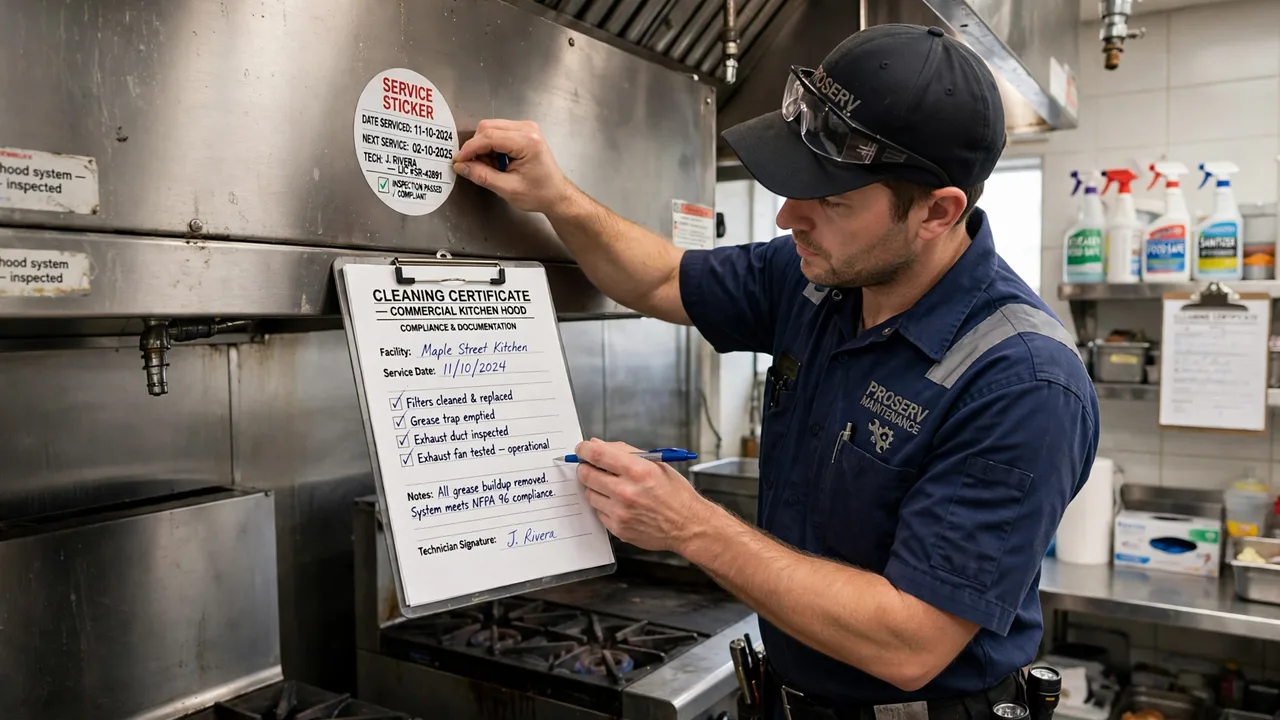 NFPA 96 Cleaning Frequencies, Explained for Kitchen ManagersMonthly, quarterly, semi-annual or annual? NFPA 96 sets your hood cleaning frequency by cooking type and volume — here is how to find yours.
Read →
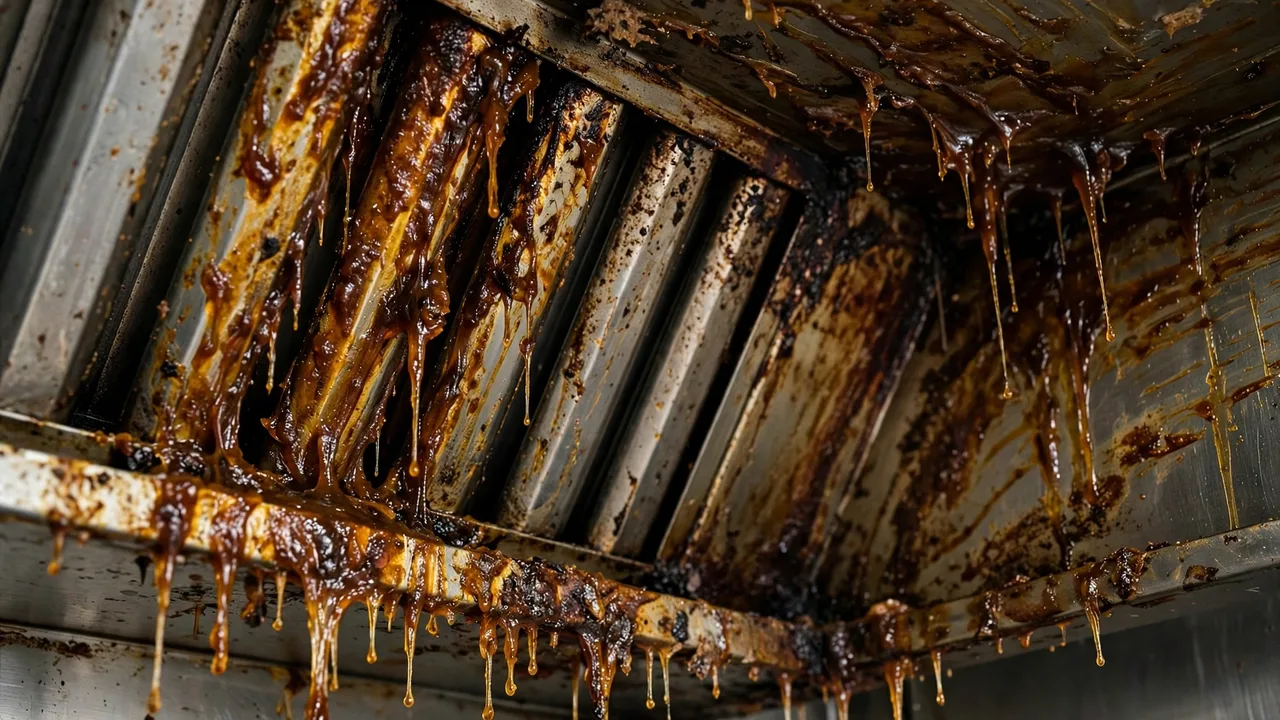 What Fire Marshals Actually Check in Your Exhaust SystemThe sticker, the filters, the duct access, the fan — a walk-through of the exhaust-system checks that decide whether your kitchen passes.
Read →
Free on-site inspection, a written scope and frequency recommendation, and night scheduling that never touches your service hours.