January 20, 2026 · Eagle Hood Cleaning
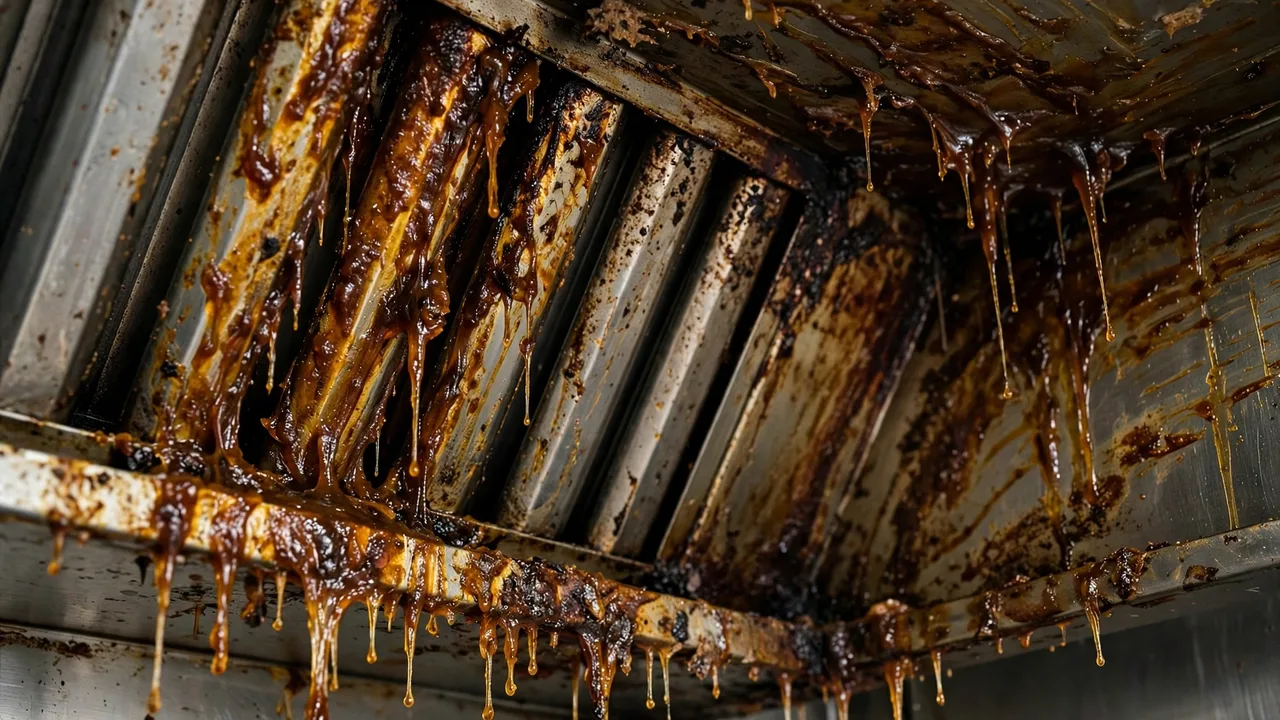
Cleaning and repair are usually sold by different companies on different schedules, and the gap between them is where systems fail. A fan bearing going dry, a belt slipping, a hinge never fitted — each one quietly defeats the cleaning done around it.
A proper cleaning crew opens the system up: panels off, fan tipped, duct inspected. That is when worn belts, tired bearings, damaged filters and missing access are visible — if the crew reports them. Our service notes record what we find, with photographs, whether or not we do the repair.
A fan that cannot tip cannot be cleaned behind. A duct without access cannot be verified. Repair support — fans, belts, hinges, access panels — exists to keep the whole system cleanable, which is what compliance actually requires.
One program, one record, no gap between "cleaned" and "working": that is the combination fire marshals and insurers are really asking for.
The free inspection settles it with photographs: your system's real condition, a written scope, and the NFPA 96 frequency for your kitchen. Call (855) 811-3088 or request it online.
 NFPA 96 Cleaning Frequencies, Explained for Kitchen ManagersMonthly, quarterly, semi-annual or annual? NFPA 96 sets your hood cleaning frequency by cooking type and volume — here is how to find yours.
Read →
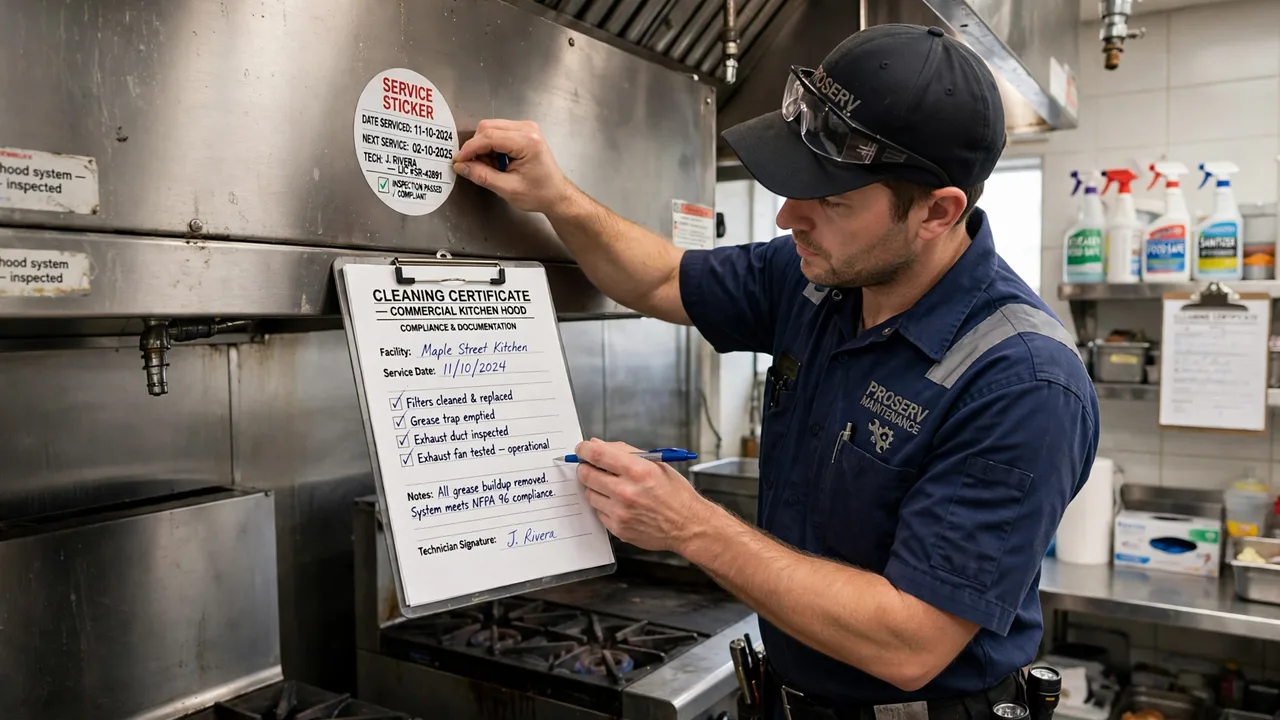
What Fire Marshals Actually Check in Your Exhaust SystemThe sticker, the filters, the duct access, the fan — a walk-through of the exhaust-system checks that decide whether your kitchen passes.
Read →
Free on-site inspection, a written scope and frequency recommendation, and night scheduling that never touches your service hours.